
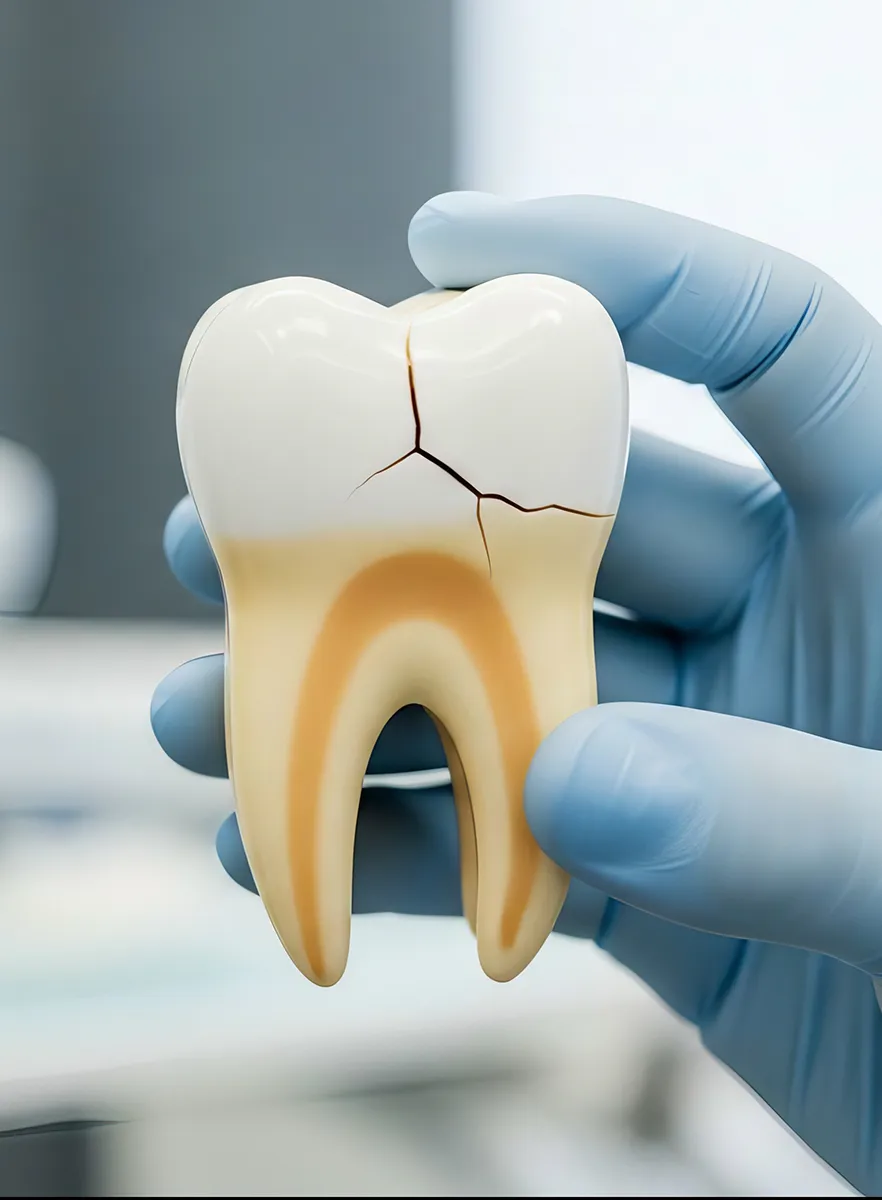
A loose or missing teeth emergency may involve teeth that have been partially displaced (luxated), pushed into the gum (intruded), or pushed outward (extruded) following trauma. Unlike a completely knocked-out tooth, these teeth remain in the mouth but are in the wrong position and require urgent stabilisation to prevent further damage or loss.
Types of loose or missing teeth emergency we treat include:
Treatment for a loose or missing teeth emergency at Secrets Dental & Medical Centre involves repositioning the tooth to its correct alignment under local anaesthesia, then splinting it to the neighbouring teeth with a flexible wire and composite bond. The splint remains in place for two to four weeks while the supporting structures heal. We monitor the tooth closely over the following months, as some traumatised teeth may require root canal treatment if the nerve does not recover.
A knocked-out tooth, known clinically as an avulsed tooth, occurs when a tooth is completely displaced from its socket due to a sudden impact. This is one of the few dental emergencies where the outcome depends heavily on what happens in the first 30 to 60 minutes after the injury. If the tooth is handled correctly and reimplanted quickly, there is a strong chance it can survive and function normally for years to come.
If you or someone you are with has a knocked-out tooth, follow these critical steps immediately:
At our Southport practice, we will assess the tooth and socket, reimplant the tooth if viable, and splint it to the adjacent teeth for stability while the periodontal ligament heals. This process typically takes several weeks, during which we will monitor your progress at regular follow-up appointments.
Note: Baby teeth that are knocked out should not be reimplanted as this can damage the developing permanent tooth underneath. However, the child should still be seen promptly to assess for other injuries.
Not all loose teeth are caused by trauma. A tooth can become loose due to advanced gum disease (periodontitis), habitual grinding or clenching (bruxism), or changes in the bite following dental treatment. Regardless of the cause, a loose tooth that is not addressed promptly is at risk of being lost entirely. At Secrets Dental & Medical Centre, we offer comprehensive treatment to repair loose tooth problems and, where possible, restore stability.
Our approach to repair loose tooth cases depends on the underlying cause:
When a loose tooth cannot be saved, we discuss replacement options including dental implants, bridges, and dentures. Our in-house dental laboratory enables us to provide replacement teeth efficiently, minimising the time you spend with a gap in your smile.
If you have noticed a tooth becoming loose or mobile, do not ignore it. Early intervention gives us the best chance to repair loose tooth problems and avoid extraction. Call us on 01704 607 125.
Dental trauma care encompasses the full spectrum of injuries affecting the teeth, gums, jawbone, and supporting structures of the mouth. At Secrets Dental & Medical Centre in Southport, our dentists are trained in the assessment and management of dental trauma across all age groups, from children who have fallen at play to adults injured in road traffic accidents or sporting incidents.
Comprehensive dental trauma care at our practice includes:
Dental trauma care does not end with the initial emergency visit. Many traumatic dental injuries require ongoing monitoring over months or even years, as complications can develop well after the initial event. We create a personalised follow-up plan for every trauma patient to ensure the best possible long-term outcome.
A facial trauma dental emergency involves injuries to the face that affect the teeth, jaws, and oral structures. These injuries often result from road traffic accidents, falls from height, sporting collisions, workplace incidents, or assaults. Facial trauma can be complex, potentially involving multiple teeth, fractured jawbone, and extensive soft tissue damage.
At Secrets Dental & Medical Centre, we manage the dental aspects of facial trauma, including:
Important: If a facial trauma dental emergency involves loss of consciousness, suspected jaw fracture (inability to open or close the mouth normally), heavy uncontrolled bleeding, or difficulty breathing, attend your nearest A&E department first. Once any life-threatening issues have been addressed, contact us for definitive dental treatment.
For facial trauma that primarily affects the teeth and surrounding soft tissues without the above warning signs, call us directly on 01704 607 125 for immediate assessment and treatment.
Oral injuries include any trauma to the mouth that damages the teeth, gums, tongue, lips, palate, or inner cheeks. Oral injury treatment at Secrets Dental & Medical Centre covers the full range of these injuries, from minor lacerations to complex multi-tooth trauma requiring staged treatment over several appointments.
Common oral injuries we treat include:
Our approach to oral injury treatment prioritises controlling any bleeding, cleaning the wound thoroughly to prevent infection, and repairing damaged tissue. For lacerations, we use fine sutures to close wounds neatly, promoting optimal healing and minimising scarring. We also prescribe antibiotics or antiseptic rinses where appropriate to prevent secondary infection.
The soft tissues of the mouth — the gums, lips, tongue, cheeks, and palate — are vulnerable to injury from trauma, biting, burns, and sharp edges from broken teeth or dental appliances. Soft tissue injury dental care at our Southport practice ensures these injuries are properly assessed, cleaned, and repaired to promote healing and prevent infection.
Our soft tissue injury dental care services include:
Most soft tissue injuries in the mouth heal relatively quickly due to the excellent blood supply to the oral tissues. However, deep lacerations, injuries that will not stop bleeding, and wounds showing signs of infection all require professional soft tissue injury dental care. If you are unsure whether your injury needs treatment, call us on 01704 607 125 and we can advise.
Our experienced dentists are trained in tooth reimplantation and comprehensive trauma management, from splinting loose teeth to suturing soft tissue injuries. With digital X-ray diagnostics for rapid fracture and bone damage detection, and an in-house dental laboratory producing custom crowns and replacements on-site, we provide complete dental trauma care for patients of all ages including children, teenagers, and adults.
Secrets is CQC registered and committed to the highest standards of patient safety. We offer transparent pricing with written estimates before treatment begins, and flexible finance plans for complex trauma cases. Our structured long-term follow-up programme monitors for delayed complications to ensure the best possible outcome.
The best outcomes for a knocked-out tooth occur when the tooth is reimplanted within 30 minutes of the injury. After 60 minutes, the chances of successful reimplantation decrease significantly. However, even if more time has passed, bring the tooth with you as reimplantation may still be attempted. The key is to keep the tooth moist in milk, saline, or between the cheek and gum, and never let it dry out.
If a tooth is loose but still in position, avoid touching it with your fingers or tongue. Bite gently on a clean cloth to hold it steady. Do not eat on that side of the mouth. If the tooth has been pushed out of alignment, do not try to force it back into position yourself. Apply a cold compress to the outside of the face to reduce swelling, and contact us on 01704 607 125 immediately.
In many cases, yes. If the tooth still has adequate bone support, deep cleaning treatment to remove bacteria and calculus from beneath the gum line can allow the tissues to heal and tighten around the tooth. We may also splint the loose tooth to its neighbours for additional support during healing. In advanced cases where significant bone has been lost, we will discuss all options including bone grafting and tooth replacement.
After the initial emergency treatment, dental trauma care involves a structured follow-up programme. We typically review traumatised teeth at one week, two to four weeks, three months, six months, and one year after the injury. At each review, we check healing, test the nerve vitality of affected teeth, and take X-rays to assess the root and bone. Some teeth may need root canal treatment if the nerve does not recover, and this can sometimes be needed months after the original injury.
Attend A&E if there is loss of consciousness, suspected jaw fracture (inability to open or close the mouth, severe pain or deformity), heavy uncontrolled bleeding, difficulty breathing or swallowing, or deep facial wounds that may need specialist surgical closure. Once any life-threatening issues have been managed at hospital, contact us for definitive dental trauma care including tooth repair, reimplantation, and splinting.
We treat dental trauma in children of all ages. For baby teeth that are knocked out, we do not reimplant them as this could damage the developing permanent tooth, but we examine the child thoroughly to rule out other injuries. For permanent teeth in children, we follow the same reimplantation and splinting protocols as for adults. We take extra care to ensure children feel safe and comfortable throughout the process, and we involve parents fully in the treatment discussion.
We clean the wound thoroughly, control any bleeding, and suture lacerations with fine stitches to promote neat healing. We remove any debris or foreign material from the wound and prescribe antibiotics or antiseptic rinses if there is a risk of infection. We also address any associated dental injuries at the same visit. Most oral soft tissue injuries heal well within one to two weeks due to the rich blood supply in the mouth.
If a knocked-out or severely damaged tooth cannot be saved, we offer several replacement options. Dental implants provide the most natural-looking and long-lasting solution. Fixed bridges use the teeth on either side to support a replacement tooth. Removable partial dentures are a more affordable option. We discuss all options, their benefits, timelines, and costs so you can make an informed decision. Our in-house dental laboratory supports faster fabrication of replacement teeth.
Secrets Dental & Medical Centre is located at 147 Liverpool Road, Birkdale, Southport, PR8 4NT. We are easily accessible from Southport town centre, Ainsdale, Formby, and across Merseyside.
Opening Hours: Monday to Friday: 9:00 AM to 5:00 PM